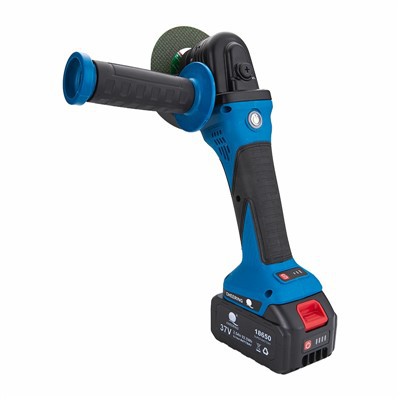
Direct drive angle grinders have been making waves in the power tool industry, and one of the most debated topics surrounding them is their energy efficiency. As a supplier of Direct Drive Angle Grinder, I am well - versed in these tools and am excited to delve into this subject.
Understanding the Basics of Direct Drive Angle Grinders
Before we assess their energy - efficiency, let's understand what direct drive angle grinders are. Unlike traditional angle grinders that use gears to transfer power from the motor to the grinding disc, direct drive models connect the motor shaft directly to the disc. This eliminates the need for a gearbox, resulting in a simpler and more compact design. The lack of a gearbox is one of the key factors that influence their energy consumption.
The Energy Efficiency Advantage of Direct Drive
One of the primary reasons direct drive angle grinders may be more energy - efficient is the reduction of mechanical losses. In a gear - driven angle grinder, the gears cause friction as they transfer power. This friction dissipates energy in the form of heat, requiring the motor to consume more electricity to maintain the desired performance. With direct drive, there are no gears to cause this friction, so a larger proportion of the electrical energy drawn from the power source is converted into useful work at the grinding disc.
Another aspect to consider is the design simplicity. A simpler design generally means fewer components that could malfunction or contribute to energy waste. With fewer moving parts, the direct drive angle grinder has less parasitic drag, meaning less energy is wasted in overcoming the resistance of internal parts. This allows the tool to operate more efficiently, potentially leading to lower energy consumption over time.


Comparing with Traditional Angle Grinders
Let's compare direct drive angle grinders to traditional gear - driven ones in real - world applications. Take the Angle Grinder 100 mm as an example. A traditional gear - driven model of this type might require a motor to work harder due to the inefficiencies of the gear system. When grinding a metal surface, the same task may consume more electrical power in a gear - driven grinder compared to a direct drive version.
In a workshop where angle grinders are used intensively throughout the day, the cumulative energy savings of using direct drive models can be significant. This not only reduces the energy bill for the workshop owner but also has a positive impact on the environment by decreasing the overall electricity consumption.
Factors Affecting Energy Efficiency
However, the energy efficiency of direct drive angle grinders is not solely determined by the direct drive mechanism. The quality of the motor plays a crucial role. A high - quality motor with advanced technology, such as brushless motors, can further enhance energy efficiency. Brushless motors are known for their lower heat generation and better power - to - weight ratios, which means they can perform the same amount of work with less energy input compared to traditional brushed motors.
The load and the type of work also influence energy consumption. For light - duty tasks like grinding small metal edges, a direct drive angle grinder can operate at a lower power setting, consuming less energy. On the other hand, for heavy - duty tasks such as cutting thick metal plates, the energy consumption will naturally be higher. But in both cases, the direct drive design can still offer efficiency benefits compared to gear - driven models.
Applications Where Energy Efficiency Matters
In commercial and industrial settings where multiple angle grinders are used simultaneously, energy efficiency is a top priority. Construction sites, metal fabrication shops, and automotive repair garages are examples of places where these tools are used extensively. By choosing direct drive angle grinders, businesses can reduce their operating costs and improve their bottom line.
For example, in a large - scale metal fabrication shop where workers are constantly using angle grinders to shape and finish metal parts, the energy savings from using direct drive models can add up to thousands of dollars over the course of a year. Moreover, in areas where electricity costs are high, the financial incentive to switch to energy - efficient tools becomes even more compelling.
The Cordless Option
For those who prefer the flexibility of cordless operation, the 100mm Cordless Angle Grinder offers a great solution. Direct drive technology in cordless models can also contribute to better battery life. Since the tool is more energy - efficient, it can perform the same amount of work on a single charge as a gear - driven cordless model, or even more. This is a significant advantage for workers who need to move around freely on the job site without being tethered to a power outlet.
Market Trends and Consumer Demand
In recent years, there has been a growing trend among consumers towards energy - efficient products. This is driven not only by the desire to save money on energy bills but also by increasing environmental awareness. As a supplier, I have noticed that more and more customers are inquiring about the energy efficiency of our Direct Drive Angle Grinder models. They are looking for tools that can deliver high - performance while also being kind to the planet and their wallets.
Conclusion
In conclusion, direct drive angle grinders offer significant energy - efficiency advantages over traditional gear - driven models. The elimination of the gearbox reduces mechanical losses and parasitic drag, allowing more of the electrical energy to be used for the intended grinding or cutting task. Factors such as motor quality and the type of work also play a role in determining energy consumption, but overall, direct drive technology provides a more efficient solution.
Whether in a commercial, industrial, or DIY setting, choosing an energy - efficient angle grinder like our Direct Drive Angle Grinder can lead to long - term cost savings and environmental benefits. If you're interested in learning more about our product range or have any inquiries about energy - efficient angle grinders, please feel free to reach out. We are always ready to assist you in finding the right tool for your needs.
References
- Industry reports on power tool technology advancements.
- Studies on energy consumption in different types of angle grinders.