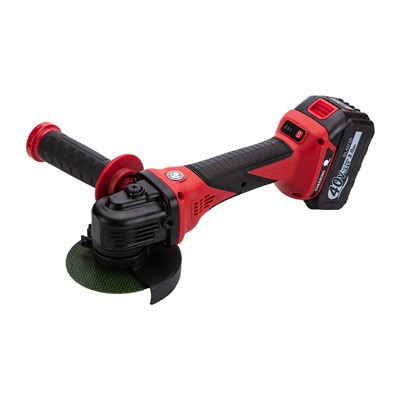
Hey there, fellow DIY enthusiasts and professionals in the construction and metalworking biz! I'm stoked to chat with you about one of the often-overlooked but super-important aspects of a brushless cordless angle grinder: the grip. As a supplier of top-notch Brushless Cordless Angle Grinders, I've seen firsthand how the right grip can make or break your experience with these powerful tools.
Why the Grip Matters
Let's face it, an angle grinder is a beast of a tool. It's got a spinning disc that can cut through metal, stone, and all sorts of tough materials. If you don't have a good grip on it, things can get pretty dangerous pretty fast. A proper grip not only helps you control the tool but also reduces fatigue during long hours of work. You don't want to end up with a sore hand or, worse, lose control and cause an accident.
Different Types of Grips
1. Rear Grip
The rear grip is probably the most common type of grip you'll find on an angle grinder. It's located at the back of the tool, right where your hand naturally falls when you pick it up. The great thing about the rear grip is that it gives you good leverage. You can really push down and apply some force when you're cutting or grinding. It's also easy to hold onto, especially for beginners.
For jobs that require a lot of pressure, like cutting through thick metal, the rear grip is your best bet. It allows you to keep the tool steady and in control. But keep in mind, if you're working for a long time, your hand might get a bit tired because you're constantly holding the weight of the tool in this position.
2. Side Grip
The side grip is another popular option. It's usually attached to the side of the angle grinder, and you can hold it with your other hand while you operate the tool. The side grip gives you extra control, especially when you're making precise cuts or working on small areas. It's like having an extra set of hands to keep the grinder steady.
If you're doing detailed work, like grinding down a weld or shaping a piece of metal, the side grip is really helpful. It allows you to make fine adjustments and keep the tool exactly where you want it. However, the side grip can be a bit tricky to use if you're not used to it. You need to have good coordination between your two hands to keep the tool balanced.
3. D-Handle Grip
The D-handle grip is less common but still a great option for certain types of work. It's shaped like the letter D and is usually located at the front of the angle grinder. The D-handle grip gives you a lot of control and stability, especially when you're working at awkward angles. You can hold onto the handle from different positions, which makes it easier to reach areas that are hard to access.
For overhead work or when you're working on a vertical surface, the D-handle grip is really useful. It allows you to keep the tool in place without having to worry about it slipping out of your hands. But the D-handle grip can add a bit of bulk to the tool, so it might not be the best choice for jobs where you need to work in tight spaces.
Factors to Consider When Choosing a Grip
1. Type of Work
The type of work you'll be doing is one of the most important factors to consider when choosing a grip. If you're doing heavy-duty cutting and grinding, a rear grip might be the best option. It gives you the leverage and control you need to apply a lot of force. On the other hand, if you're doing detailed work, like sanding or polishing, a side grip or D-handle grip might be more suitable. They allow you to make precise movements and keep the tool steady.
2. Comfort
Comfort is also key when it comes to choosing a grip. You'll be holding the angle grinder for long periods of time, so you want a grip that feels good in your hand. Look for grips that are made of soft, rubberized materials. They reduce vibration and make the tool more comfortable to hold. You should also consider the size and shape of the grip. It should fit your hand well and not feel too bulky or too small.
3. Safety
Safety should always be your top priority when using any power tool. A good grip can help you prevent accidents by keeping the tool in control. Make sure the grip is secure and doesn't slip easily. Some grips come with anti-slip features, like ridges or grooves, which can improve your grip on the tool. You should also wear safety gloves to further enhance your grip and protect your hands.
Our Brushless Cordless Angle Grinders and Their Grips
We offer a wide range of brushless cordless angle grinders with different types of grips to suit your needs. Our 40V Brushless Angle Grinder comes with a rear grip that provides excellent leverage and control. It's perfect for heavy-duty cutting and grinding jobs.
If you're looking for a more versatile option, our Brushless Variable Speed Angle Grinder comes with a side grip. It allows you to make precise cuts and adjustments, making it ideal for detailed work.
We also have a Brushless AC Angle Grinder and a Brushless Motor Angle Grinder, both of which offer different grip options to meet your specific needs.
Conclusion
Choosing the right grip for your brushless cordless angle grinder is crucial for a safe and efficient working experience. Whether you're a professional tradesperson or a DIY enthusiast, taking the time to find the grip that suits your needs can make a big difference. Remember to consider the type of work you'll be doing, your comfort, and safety when making your decision.
If you're interested in learning more about our brushless cordless angle grinders or have any questions about the grips, feel free to reach out. We're here to help you find the perfect tool for your next project. Let's get in touch and start a conversation about how we can meet your procurement needs.


References
- Angle Grinder Safety Guide, Occupational Safety and Health Administration (OSHA)
- Power Tools Handbook, Industrial Press Inc.