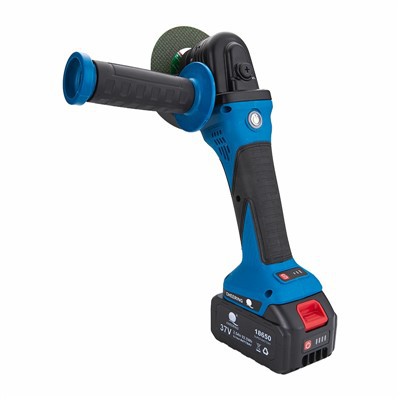
Hey there! If you're into DIY projects, construction work, or any kind of metal or stone-working job, you’ve probably heard of angle grinders. They're super useful tools, but when it comes to working in tight spaces, things can get a bit tricky. As a gearless angle grinder supplier, I've got some insights to share on whether a gearless angle grinder can be used in those hard-to-reach spots.
Let's first understand what a gearless angle grinder is. Unlike traditional angle grinders with gears to transfer power from the motor to the grinding wheel, gearless angle grinders, also known as Direct Drive Angle Grinder, have a direct connection between the motor and the wheel. This design has a few key features that can make it a good option for tight spaces.
One of the main advantages of a gearless angle grinder is its compact size. Without the bulky gearbox, these grinders are often more slender and have a shorter overall length. This means they can fit into narrower gaps and corners more easily compared to their geared counterparts. For example, if you're working on a plumbing project and need to grind a small metal fitting in a tight space under a sink, a gearless angle grinder can maneuver around pipes and other obstacles with less hassle.
Another benefit is the better control you get with a gearless design. Since there are fewer moving parts between the motor and the wheel, there's less vibration and torque loss. This translates to smoother operation, which is crucial when working in confined areas where precision is key. You can make more accurate cuts and grinding motions without worrying about the tool getting out of control.
Now, let's talk about some specific models. Our 100mm Cordless Angle Grinder is a great example. The 100mm size is already quite compact, and being cordless adds to its mobility. You can take it anywhere without having to worry about finding a power outlet or getting tangled in cords. This makes it perfect for working in tight spaces, especially in areas where access to electricity is limited, like inside a metal structure or a small crawl space.
The Angle Grinder 100 also offers excellent performance in tight spots. It's designed with a focus on portability and ease of use. The direct drive system ensures that you get maximum power transfer, so you can tackle tough grinding jobs even in confined spaces.
However, using a gearless angle grinder in tight spaces isn't always a walk in the park. There are a few challenges you might face. For one, the lack of a gearbox means that the motor is directly exposed to the forces and stresses of grinding. This can lead to overheating if the tool is used continuously for long periods, which is often the case when working in difficult-to-reach areas where you might need to make multiple passes.
Another potential issue is the visibility. When working in tight spaces, it can be hard to see what you're doing clearly. The grinder's housing and the grinding wheel itself can block your view, making it more difficult to make accurate cuts and avoid damaging surrounding materials. To overcome this, you might need to use additional lighting or mirrors to get a better look at the work area.
Safety is also a major concern when using any power tool, especially in tight spaces. With a gearless angle grinder, you need to be extra careful because of the high-speed rotation of the wheel. Make sure you're wearing the appropriate safety gear, such as safety glasses, gloves, and ear protection. Also, be aware of your surroundings and any potential hazards, like sharp edges or flammable materials.
Despite these challenges, with the right technique and precautions, a gearless angle grinder can be a valuable tool for working in tight spaces. Here are some tips to help you get the most out of it:
- Keep the tool clean and well-maintained. Regularly check the grinding wheel for wear and tear, and replace it when necessary. A worn-out wheel can cause uneven grinding and increase the risk of accidents.
- Use a light touch when operating the grinder. Let the tool do the work, and don't force it. Applying too much pressure can cause the wheel to bind or break, which can be dangerous.
- Take breaks to let the motor cool down. If you notice that the tool is getting too hot, stop using it and wait for it to cool off before continuing.
- Plan your work carefully. Before you start grinding, take a few minutes to assess the area and figure out the best way to approach the job. This can help you avoid unnecessary movements and reduce the risk of damaging the tool or the surrounding materials.
In conclusion, a gearless angle grinder can definitely be used in tight spaces, thanks to its compact size, better control, and direct drive system. However, it's important to be aware of the challenges and take the necessary precautions to ensure a safe and successful job.
If you're in the market for a high-quality gearless angle grinder that's suitable for tight spaces, we've got you covered. Our range of 100mm Cordless Angle Grinder, Direct Drive Angle Grinder, and Angle Grinder 100 are designed to meet the needs of both professional tradespeople and DIY enthusiasts.


If you're interested in learning more about our products or have any questions, don't hesitate to reach out. We're here to help you find the right tool for your job and provide you with the best possible service. Let's start a conversation and see how we can help you with your next project.
References
- "Angle Grinders: A Comprehensive Guide" - Industry Handbook
- "Working with Power Tools in Tight Spaces" - DIY Magazine