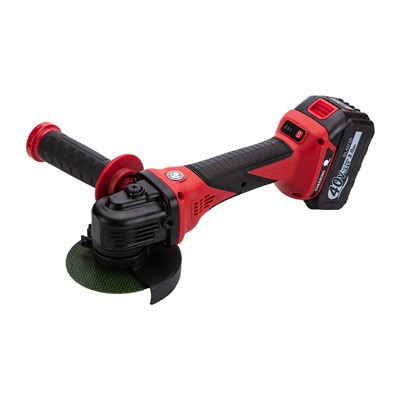
Hey there, folks! As a supplier of Portable Brushless Angle Grinders, I'm often asked about the RPM (revolutions per minute) of these nifty tools. You know, RPM is a crucial factor when it comes to the performance of an angle grinder. It determines how fast the grinding wheel spins, which in turn affects how efficiently you can cut, grind, or polish. So, let's dive into the world of RPM and find out what's what with portable brushless angle grinders.
First things first, what's the deal with a portable brushless angle grinder? Well, it's a game-changer. Unlike traditional grinders with brushed motors, brushless ones are more efficient, last longer, and offer better performance. If you're interested in checking out some of our great models, you can click on these links: Brushless Motor Angle Grinder, Brushless Cordless Angle Grinder, Brushless Variable Speed Angle Grinder, Brushless Direct Drive Angle Grinder, and Portable Brushless Angle Grinder.
Now, back to RPM. The RPM of a portable brushless angle grinder can vary quite a bit. It depends on several factors, like the size of the grinder, the power of the motor, and the intended use. Generally speaking, these grinders can have RPMs anywhere from around 2,800 to 12,000.
Smaller portable brushless angle grinders, usually those with a wheel diameter of 4 - 4.5 inches, tend to have higher RPMs. They can easily reach 10,000 - 12,000 RPM. This high speed is great for detail work, like polishing small metal parts or cutting through thin materials. The fast - spinning wheel allows you to make precise cuts and get a smooth finish quickly.
On the other hand, larger grinders with 7 - 9 - inch wheels often have lower RPMs, in the range of 2,800 - 6,000 RPM. These grinders are designed for heavy - duty tasks, such as grinding large metal objects or cutting through thick concrete. The lower RPM provides more torque, which is essential for powering through tough materials. You don't need a super - high speed for these jobs; you need the strength to break through or remove large amounts of material.
But why is there such a difference in RPM based on the size of the grinder? Well, it all comes down to physics. A larger wheel has more mass and inertia. If you spin a large wheel too fast, it can be dangerous because the centrifugal force can cause the wheel to break apart. Also, for heavy - duty tasks, a lower RPM with higher torque is more effective. It gives the grinder the power to chew through thick materials without overheating the motor or wearing out the wheel too quickly.
Some of our portable brushless angle grinders come with variable speed settings. This is a really cool feature because it gives you the flexibility to adjust the RPM according to the task at hand. For example, if you're starting a rough grinding job on a thick piece of steel, you can set the grinder to a lower RPM for more torque. Then, when you're getting close to a smooth finish, you can crank up the RPM to get that nice, polished look. These variable - speed grinders are a favorite among professionals who need to switch between different types of work quickly. You can check out our Brushless Variable Speed Angle Grinder for this amazing feature.
Another thing to consider is the quality of the motor. A high - quality brushless motor in our portable angle grinders is designed to maintain a consistent RPM even under heavy load. This means that whether you're just starting a cut or you're in the middle of a tough grinding job, the grinder will keep spinning at the set speed. It's a big advantage over brushed motors, which tend to lose RPM when they're working hard.
So, how do you choose the right RPM for your needs? If you're a DIYer who mostly does small projects around the house, like grinding off a bit of rust or cutting a small piece of metal, a grinder with a higher RPM (around 10,000 - 12,000) would be a great choice. It's fast, lightweight, and easy to handle. But if you're a professional contractor doing a lot of heavy - duty work, such as concrete grinding or large - scale metal fabrication, you'll want a grinder with a lower RPM and high torque.
In addition to the task itself, you also need to think about the type of grinding wheel you're using. Different wheels are designed to work at different RPMs. For example, a thin cut - off wheel might require a higher RPM to make a clean cut, while a thick grinding wheel might work better at a lower RPM. Always check the manufacturer's recommendations for the wheel and match it with the appropriate RPM setting on your grinder.
As a supplier, we understand that choosing the right portable brushless angle grinder with the right RPM can be a bit confusing. That's why we're here to help. Whether you're a newbie or a seasoned pro, our team has the knowledge and experience to assist you in finding the perfect grinder for your needs.


If you're interested in purchasing our portable brushless angle grinders, we'd love to have a chat with you about your requirements. We can offer you detailed information about the RPM, power, and other features of our products. Just reach out to us, and we'll be happy to start a discussion about how our grinders can fit into your projects.
In conclusion, the RPM of a portable brushless angle grinder can vary widely, and it depends on many factors. By understanding your specific needs and the capabilities of different grinders, you can make an informed decision. And remember, we're here as your go - to supplier for all your portable brushless angle grinder needs.
References
- General knowledge about power tools and angle grinders.
- Experience from being a supplier of portable brushless angle grinders.