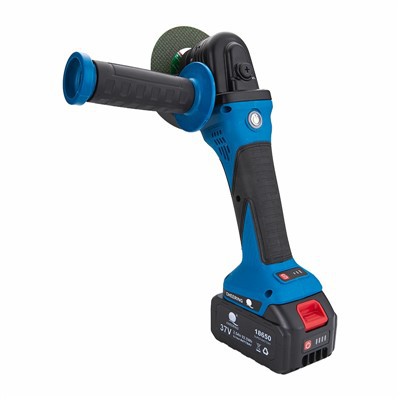
Hey there, fellow DIY enthusiasts and professional tradespeople! As a supplier of AC Brushless Angle Grinders, I've seen firsthand the importance of choosing the right tool for the job. One of the most common questions I get asked is, "What's the difference between single - speed and variable - speed AC brushless angle grinders?" Well, let's dive right in and break it down.
Single - Speed AC Brushless Angle Grinders
Let's start with single - speed angle grinders. These bad boys are straightforward and simple. They operate at a fixed speed, which is usually set by the manufacturer. For instance, you might have a single - speed grinder that runs at 10,000 RPM (revolutions per minute). This fixed speed can be a real advantage in certain situations.
One of the main benefits of a single - speed grinder is its simplicity. There are no complicated speed settings to fiddle with, so you can just pick it up and start using it. This makes it a great choice for beginners or for tasks where a consistent speed is all you need. For example, if you're cutting through a thick piece of metal, a single - speed grinder can provide a steady, powerful cutting action.
Another advantage is durability. Since there are fewer moving parts involved in controlling the speed, single - speed grinders tend to be more reliable and less prone to mechanical failures. They're built to handle tough jobs and can last for a long time with proper maintenance.
However, single - speed grinders do have their limitations. They're not very versatile. If you need to work on different materials or perform different tasks, a fixed speed might not be ideal. For example, when grinding a delicate surface, a high - speed setting could cause damage. And if you're trying to polish a metal object, a single - speed grinder might not be able to provide the right speed for a smooth finish.
Variable - Speed AC Brushless Angle Grinders
Now, let's talk about variable - speed angle grinders. These are the more advanced option. With a variable - speed grinder, you can adjust the RPM according to the task at hand. Most variable - speed grinders have a speed range, like from 2,000 to 12,000 RPM.
The biggest advantage of a variable - speed grinder is its versatility. You can use it for a wide variety of tasks. When you're cutting through thick metal, you can set it to a high speed for a fast and efficient cut. But when you're grinding or polishing a softer material, like wood or plastic, you can lower the speed to avoid damage. This makes variable - speed grinders a great all - around tool for both DIYers and professionals.
Variable - speed grinders also give you more control. You can fine - tune the speed to match the specific requirements of the job. This is especially important when working on precision tasks, like shaping a metal workpiece or removing rust from a small area.
But there are also some downsides to variable - speed grinders. They're usually more expensive than single - speed grinders. The additional technology required to control the speed adds to the cost. They're also more complex, which means there's a higher chance of something going wrong. And since they have more features, they might require a bit more maintenance.
Performance Comparison
In terms of performance, both single - speed and variable - speed AC brushless angle grinders have their strengths. Single - speed grinders are great for heavy - duty, high - speed tasks. They can deliver a lot of power consistently, which is essential for cutting through thick materials.
On the other hand, variable - speed grinders offer more flexibility. They can adapt to different materials and tasks, which makes them more useful in a wider range of situations. If you're a professional who needs to work on different projects every day, a variable - speed grinder might be the better choice.
Which One Should You Choose?
So, which type of grinder should you go for? Well, it depends on your needs. If you're a beginner or if you only need to do simple, repetitive tasks, a single - speed grinder might be sufficient. It's affordable, easy to use, and reliable.
But if you're an experienced user or if you need to work on a variety of projects, a variable - speed grinder is worth the investment. It gives you more control and versatility, which can save you time and effort in the long run.
As a supplier of AC Brushless Angle Grinder, I can offer you a wide range of both single - speed and variable - speed options. Our grinders are built with high - quality materials and advanced technology to ensure top - notch performance and durability.


If you're in the market for a powerful and reliable angle grinder, check out our Powerful Angle Grinder. It's designed to meet the needs of both DIYers and professionals.
Conclusion
In conclusion, the main difference between single - speed and variable - speed AC brushless angle grinders lies in their speed control and versatility. Single - speed grinders are simple, durable, and great for specific tasks, while variable - speed grinders offer more flexibility and control for a wider range of applications.
If you're interested in purchasing an AC brushless angle grinder, whether it's a single - speed or variable - speed model, feel free to reach out to us. We're here to help you find the perfect tool for your needs. Let's start a conversation and see how we can assist you in getting the right angle grinder for your projects.
References
- "Angle Grinder Basics: Everything You Need to Know", DIY Magazine
- "Choosing the Right Angle Grinder for Your Work", Professional Trades Journal