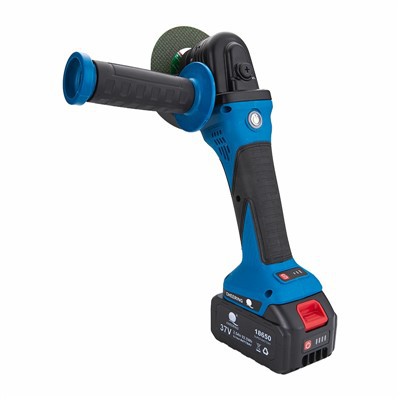
As a supplier of brushless cordless angle grinders, I often encounter inquiries from customers regarding the maximum RPM (Revolutions Per Minute) of these powerful tools. Understanding the maximum RPM is crucial as it directly impacts the performance, efficiency, and safety of the angle grinder. In this blog, I will delve into the factors that determine the maximum RPM of a brushless cordless angle grinder, its significance, and how it varies across different models.
What Determines the Maximum RPM of a Brushless Cordless Angle Grinder?
The maximum RPM of a brushless cordless angle grinder is influenced by several key factors, including the motor design, battery power, and the overall build quality of the tool.
Motor Design
The motor is the heart of the angle grinder, and its design plays a pivotal role in determining the maximum RPM. Brushless motors, which are commonly used in modern cordless angle grinders, offer several advantages over traditional brushed motors. They are more efficient, generate less heat, and have a longer lifespan. The number of poles in the motor, the winding configuration, and the quality of the magnetic materials used all contribute to the motor's ability to achieve high RPMs.
For instance, a motor with a higher number of poles can typically achieve higher torque at lower RPMs, while a motor with a more optimized winding configuration can reduce electrical losses and improve efficiency, allowing for higher RPMs. Additionally, the use of high-quality magnetic materials, such as neodymium magnets, can enhance the motor's performance and enable it to reach higher speeds.
Battery Power
The battery is another critical factor that affects the maximum RPM of a brushless cordless angle grinder. The voltage and capacity of the battery determine the amount of power that can be delivered to the motor. A higher voltage battery can provide more power, allowing the motor to spin at higher speeds. Similarly, a battery with a higher capacity can supply power for a longer period, ensuring consistent performance even at high RPMs.
For example, a 20V battery will generally be able to provide more power than a 12V battery, enabling the angle grinder to achieve higher RPMs. However, it's important to note that the battery's performance can also be affected by factors such as temperature, age, and the quality of the charging system.
Build Quality
The overall build quality of the angle grinder also plays a role in determining the maximum RPM. A well-built angle grinder with a sturdy housing, high-quality bearings, and a balanced design can handle the stresses and vibrations associated with high-speed operation more effectively. This not only ensures the tool's durability but also allows it to maintain a stable RPM and deliver consistent performance.


On the other hand, a poorly built angle grinder may experience excessive vibration, which can lead to premature wear and tear of the components and reduce the tool's maximum RPM. Additionally, a lack of proper cooling mechanisms can cause the motor to overheat, further limiting the tool's performance.
Significance of the Maximum RPM
The maximum RPM of a brushless cordless angle grinder is an important specification that can have a significant impact on its performance and usability. Here are some key reasons why the maximum RPM matters:
Cutting and Grinding Efficiency
The higher the RPM, the faster the cutting or grinding wheel rotates, which can result in more efficient material removal. This is particularly important when working with hard or dense materials, such as metal or concrete. A higher RPM allows the wheel to cut through the material more quickly, reducing the time and effort required to complete the job.
For example, when cutting through thick steel plates, an angle grinder with a higher maximum RPM can make the task much easier and faster compared to a tool with a lower RPM.
Precision and Control
In addition to efficiency, the maximum RPM also affects the precision and control of the angle grinder. A higher RPM can provide a smoother and more consistent cutting or grinding action, allowing for greater accuracy and control over the tool. This is especially important when working on delicate or intricate projects, where precision is key.
For instance, when grinding a bevel on a metal pipe, a higher RPM can help achieve a more precise and uniform bevel, resulting in a better-quality finish.
Safety
Safety is always a top priority when using power tools, and the maximum RPM of an angle grinder is no exception. Using an angle grinder at a speed that exceeds its recommended maximum RPM can be extremely dangerous, as it can cause the wheel to break or shatter, leading to serious injury.
It's important to always use the appropriate cutting or grinding wheel for the task at hand and to ensure that the wheel's maximum RPM rating is equal to or higher than the angle grinder's maximum RPM. Additionally, following all safety guidelines and wearing the necessary personal protective equipment (PPE) is essential to prevent accidents and injuries.
Variations in Maximum RPM Across Different Models
The maximum RPM of brushless cordless angle grinders can vary significantly depending on the model and brand. Different manufacturers may use different motor designs, battery technologies, and build materials, which can all affect the tool's performance and maximum RPM.
Some entry-level brushless cordless angle grinders may have a maximum RPM of around 8,000 - 10,000 RPM, which is suitable for light-duty tasks such as grinding small metal parts or cutting thin materials. On the other hand, high-end professional-grade angle grinders can achieve maximum RPMs of up to 12,000 - 13,000 RPM or even higher, making them ideal for heavy-duty applications such as cutting thick steel plates or grinding large concrete surfaces.
When choosing a brushless cordless angle grinder, it's important to consider your specific needs and the type of tasks you'll be performing. If you're a DIY enthusiast or a casual user, an entry-level model with a lower maximum RPM may be sufficient for your needs. However, if you're a professional tradesperson who regularly works with tough materials, investing in a high-end angle grinder with a higher maximum RPM can significantly improve your productivity and the quality of your work.
Our Product Range
As a supplier of brushless cordless angle grinders, we offer a wide range of products to meet the diverse needs of our customers. Our Portable Brushless Angle Grinder is a lightweight and compact option that is perfect for on-the-go use. It features a powerful brushless motor and a high-capacity battery, allowing it to achieve a maximum RPM of up to 10,000 RPM.
For more heavy-duty applications, our Brushless AC Angle Grinder is a great choice. It is designed to handle the toughest materials and can reach a maximum RPM of 12,000 RPM. With its robust construction and advanced features, this angle grinder is built to last and deliver consistent performance.
We also offer a Brushless Motor Angle Grinder that combines the latest motor technology with a user-friendly design. This angle grinder offers a maximum RPM of 11,000 RPM and is suitable for a wide range of cutting and grinding tasks.
Conclusion
In conclusion, the maximum RPM of a brushless cordless angle grinder is an important specification that can have a significant impact on its performance, efficiency, and safety. Understanding the factors that determine the maximum RPM, its significance, and how it varies across different models can help you make an informed decision when choosing an angle grinder for your needs.
As a supplier of high-quality brushless cordless angle grinders, we are committed to providing our customers with the best products and services. If you have any questions or would like to discuss your specific requirements, please feel free to contact us. We look forward to working with you and helping you find the perfect angle grinder for your projects.
References
- "Power Tools: A Comprehensive Guide." McGraw-Hill Professional, 2018.
- "Handbook of Power Tool Technology." CRC Press, 2019.
- Manufacturer's specifications and product literature.