


If you've ever had to tackle a job that's outside-like cutting rebar on a construction site during a light drizzle, grinding down rust on a wet metal fence, or even sanding a damp piece of weathered wood-you've probably wondered the same thing: can I use a brushless cordless angle grinder in wet conditions? As someone who works with these tools day in and day out (we're a brushless cordless angle grinder supplier, so this question comes up way more than you'd think), I get why it's such a common headache.
First, let's cut through the confusion right off the bat. A lot of people hear "cordless" and automatically assume it's totally fine around water, but that's not the full story. On the flip side, don't write it off entirely either-there's a big middle ground, and it all boils down to two key things: the tool's IP rating (that Ingress Protection code, the industry standard for water and dust resistance) and how you're actually using it.
Let's start with the basics: why wet conditions matter for angle grinders. Traditional corded angle grinders draw power through a plug, so water is a huge safety risk because it can conduct electricity directly to the user. Cordless tools, though, run on lithium-ion batteries, which are sealed in a housing separate from the motor. But that doesn't mean they're waterproof.
Our portable brushless angle grinder line, for example, comes in a few different IP ratings-most of the ones we sell for outdoor work have IP54 ratings. What does IP54 mean? The first number (5) is dust resistance: not totally dust-tight, but enough that dust won't get in enough to mess up internal parts. The second (4) is water resistance: it can handle splashing water from any direction, no problem. So if you're working in light rain, or accidentally spill a bucket of water nearby, that's totally okay. But if you're submerging it in a puddle, or holding it under a running hose for a long time? That's a no-go.
Wait, let's clarify that: "light rain" and "splashing" are key here. I've seen too many folks try to use their grinder during a heavy downpour, and even if it's rated IP54, consistent exposure to heavy water can seep into tiny gaps-like the battery connection, or the vent slots the motor uses to stay cool. Brushtools rely on that ventilation a lot, actually, because brushless motors run hot when they're working hard. Water in the vents can cause the motor to short out, or even damage the battery's internal circuits.
Speaking of brushless motors, that's where our tools have an edge over old-style brushed grinders. Brushed motors have moving parts (those little carbon brushes) that can spark when they're running, and if there's any water or moisture around, those sparks are a fire or shock hazard. Brushless motors don't have carbon brushes-they're electronically controlled, so there's no sparking inside the motor housing. That's a big reason why brushless cordless angle grinders are safer to use in damp conditions than their brushed counterparts.
But safety isn't just about the tool's build-there's also user safety to think about. Even if your grinder has an IP rating, you should always take a few simple precautions before using it near water. First, make sure your hands are dry before handling the battery or attaching the tool to the grinder. If the grinder's cordless, you don't have a plug to worry about, but the battery terminals can still conduct electricity if they're wet, so moisture on your hands could lead to a tiny shock (not deadly, but definitely unpleasant). Second, don't use a damaged battery or tool-if you see cracks in the housing, or the battery has a swollen cell, that's a big risk, wet conditions or not.
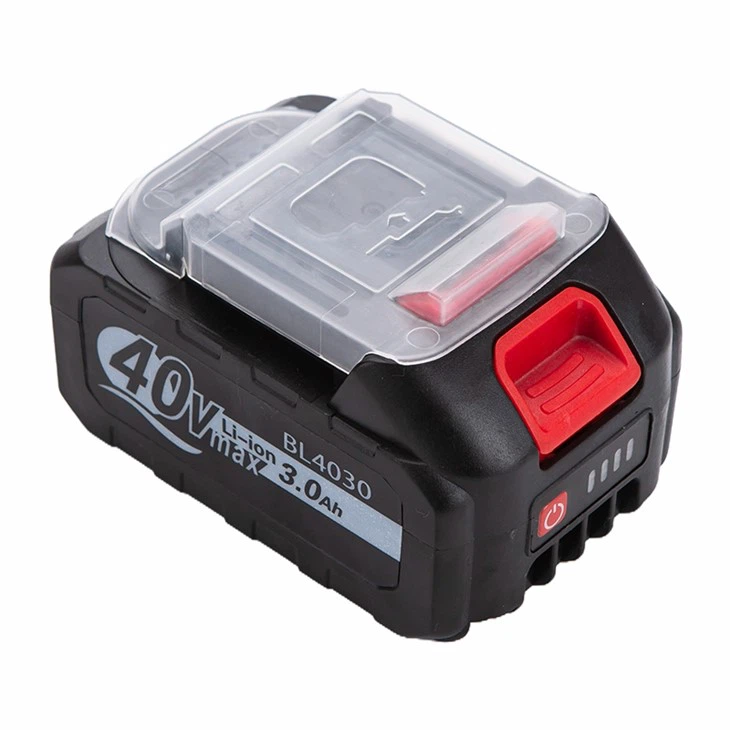
Let's talk about a scenario we run into all the time: construction work on a job site that's a bit muddy, or a little damp from morning dew. The 40V brushless angle grinder is perfect for that kind of job. It's designed for heavy-duty work, so it has a more robust IP54 rating, and it's powerful enough to cut through thick metal even when the tool's a bit cold from being outside in the damp air. We've had contractors tell us they use these grinders all summer in light rain without any issues-they just keep a small, waterproof cover for the grinder when it's not in use, and dry off the battery before swapping it out if they need to.

Of course, there are times when using a brushless cordless angle grinder in wet conditions is a really bad idea. If you're working in a submerged environment-like cutting through a metal pipe that's fully under water-don't do it. Even if the tool is IP-rated, the water pressure is way higher than what the rating is designed for, and water will get inside. Another time? If you're working with flammable materials that might be damp. Wait, no-flamable materials that are damp? No, the real risk there is that if sparks from the grinder (even brushless grinders produce sparks from the wheel) land on damp fuel or something? No, actually, damp fuel is less flammable, but if you're grinding near gas or propane that's leaking, don't do it wet or dry. The big no-no for wet conditions is anything that's not just splashes or light moisture.
Wait, let's also clear up a common myth: some people think "cordless" means it's waterproof, so they use it in heavy rain all the time, and then wonder why the motor stops working a month later. That's usually because they didn't check the IP rating. Our brushless motor angle grinder line, for instance, is marked clearly with its IP rating on the product page, so you know exactly what it can handle. If you're looking for a tool that's meant to be used in more extreme wet conditions-like pressure washing after grinding, or working in heavy rain a lot-you might want to look for an IP67 rated tool, which can be submerged in up to 1 meter of water for 30 minutes. That's not the standard for most cordless grinders, but some specialty models have that.
Another point: battery care. Lithium-ion batteries don't like extreme temperatures, and wet, cold conditions can shorten their lifespan. If you're using your grinder in damp, cold weather, try to keep the battery as warm as possible-store it in a pocket, not left out in the cold, and let it warm up to room temperature before using it. If the battery gets wet, don't try to charge it right away. Take it out, dry it off with a soft cloth, and let it sit in a dry, warm place for a few hours before charging. I've had a customer tell us they ruined two batteries because they left them out in the rain during a job, and didn't let them dry before charging. That's a simple mistake, but it's avoidable.
Let's circle back to the original question: can you use a brushless cordless angle grinder in wet conditions? The short answer is: yes, if it's rated for it, and you take the right precautions. The long answer is: don't go submerging it, don't use it in heavy downpours for long periods, and always dry off the battery and tool parts after use.
If you're in the market for an angle grinder designed for outdoor, damp work, our brushless direct drive angle grinder is the top pick. It has no gearbox, so there are fewer parts that can be damaged by moisture, which makes it even more reliable in wet conditions.
One last thing: even with all the safety features, always follow the manufacturer's guidelines. We include a little note in every product manual that says "do not use in standing water or submerge," and that's there for a reason. We've tested our tools in conditions that meet their IP rating, but we don't test them beyond that. If you have a specific job in mind that involves wet conditions, feel free to reach out-we're a brushless cordless angle grinder supplier, so we can help you pick the right model for your needs. Whether you're a contractor working on a job site, a DIYer fixing up your backyard, or someone who just needs a tool that can handle a bit of moisture, we've got options that work.
If you're ready to find the right brushless grinder for your wet-weather needs, check out our product pages: the portable brushless angle grinder, 40V brushless angle grinder, full line of brushless cordless angle grinders, brushless motor angle grinders, and brushless direct drive angle grinders.
We'd love to help you find the perfect tool for your next job, so don't hesitate to connect with us for procurement discussions.
References
- International Electrotechnical Commission. (2017). IEC 60529: Degrees of Protection Provided by Enclosures (IP Code).
- Bosch Power Tools. (2022). Brushless Motor Technology: Benefits for Cordless Power Tools.
- DeWalt. (2021. Ingress Protection Ratings for Cordless Power Tools: What You Need to Know.
- Construction Equipment Guide. (2023. Safety Best Practices for Using Power Tools in Wet Job Site Conditions.


