


If you've ever stood near a construction site, metal fabrication shop, or even a home improvement project where someone's cutting, grinding, or sanding, you know that angle grinders are one of the loudest, most piercing tools around. The high-pitched whine and rough grinding roar don't just ruin your hearing after a long day-they can also cause workplace stress, violate noise ordinances, and make communication on busy sites almost impossible. For years, the only way to cut down on that noise was to wear earplugs or earmuffs, but in recent years, a new category of tools has emerged: the mute angle grinder. As a supplier of these specialized tools, I've spent countless hours testing both regular and mute angle grinders, working with metalworkers, contractors, and DIYers to understand exactly what sets them apart. If you're wondering whether a mute angle grinder is worth the investment, let's break down the key differences, how they work, and when each tool is the right choice for your projects.
First, it's important to ground this conversation in the basics of what an angle grinder is, to set a common baseline. A standard angle grinder is a handheld power tool that uses a rotating abrasive disc to cut, grind, sand, or polish metal, tile, concrete, and other hard materials. Most common models are the compact 115mm angle grinders, which are lightweight enough for extended use and perfect for small to medium projects. If you're in the market for a reliable compact model, you can check out our Angle Grinder 115 page to see our full range of standard options. Regular angle grinders work by running an electric motor (corded or cordless) that spins the disc at extremely high speeds-usually between 10,000 and 12,000 RPM for 115mm models. That high speed and the friction between the disc and the material create two types of noise: the mechanical whine of the motor's gears and internal components, and the airborne sound generated by the grinding action itself. Occupational safety organizations like OSHA note that regular angle grinders typically produce noise levels between 90 and 110 decibels, which is equivalent to standing next to a motorcycle or a lawnmower-enough to cause permanent hearing damage if used without proper protection for more than 15 minutes at a time.
Now, a mute angle grinder isn't "completely silent"-that's a common misconception. No power tool with a spinning abrasive disc can be silent, because the grinding action itself will always generate some sound. Instead, mute angle grinders are designed to significantly reduce noise levels compared to regular models. Our mute angle grinders run at 9000 RPM with noise levels below 60 dB, which is about the same as a normal conversation or a quiet office-quiet enough that you can hold a conversation at a worksite while using the tool without raising your voice, and gentle enough that it won't put constant strain on your hearing. The biggest question most people ask is: how do they achieve that noise reduction without sacrificing power or performance?
The core difference lies in the design of the motor and the internal components that drive the disc, plus specialized dampening features that cut down on both mechanical and airborne noise. Regular angle grinders rely on small, high-speed universal motors-these are lightweight, powerful for their size, and common in many handheld power tools, but they produce a lot of electrical arcing and gear whine that translates directly to noise. Mute angle grinders, by contrast, use brushless motors with variable speed controls, paired with reinforced gear systems that reduce vibration and friction. For example, all of our Mute Angle Grinder models feature a brushless motor that eliminates the arcing between brushes and the commutator, which is a major source of that sharp, high-pitched whine in regular grinders. Brushless motors are also more efficient, so they produce less heat and don't wear out as quickly as universal motors, adding to their long-term value.
Another key design feature is vibration dampening. Regular angle grinders have less insulation between the internal components and the outer housing, so noise and vibration transfer directly to the user's hands and the surrounding area. Mute angle grinders have rubberized or foam-dampened housings, plus rubber gaskets around the motor and gear assembly that absorb vibration before it can become sound. Some models also feature a sound-dampening disc guard, which is a critical part of the tool's safety design (it protects you from flying debris) but also works to contain the airborne noise generated by the grinding action. That guard isn't just a flimsy plastic cover, either-we engineered our guards to redirect and absorb sound waves, so instead of bouncing around the worksite, they're quieted before they reach your ears.
It's important to note that mute angle grinders don't cut corners on performance to achieve that noise reduction. If you're worried that a quieter grinder will be less powerful for cutting thick metal or grinding concrete, think again. Our mute 115mm models run at 9000 RPM while keeping noise below 60 dB, and they're capable of handling all the same tasks: cutting rebar, grinding welds, sanding tile, and polishing metal surfaces. In fact, many users report that the balance of mute angle grinders is actually better than regular models, because the dampened components add a slight weight that makes the tool easier to control for extended periods-less vibration in your hands also means less fatigue at the end of a long day. For users who want even more control, we also offer 115mm Angle Grinder Variable Speed mute models, so you can adjust the speed for delicate tasks like shaping thin metal or grinding soft materials, without sacrificing noise reduction.
Another common point of confusion is the difference between a 115mm angle grinder and a 115 degree angle grinder, in case you're shopping and mixing up model specs. A 115 Degree Angle Grinder refers to the angle of the gear housing relative to the handle, which is designed to give you better access to tight spaces, like when grinding welds in a corner or working on small metal parts. That feature is available in both regular and mute angle grinder lines, so if you need a tool that works in cramped spaces without the loud noise, you can get the best of both.
Now, let's talk about when you should choose a mute angle grinder over a regular one, and vice versa. The most obvious use case for a mute angle grinder is any environment where noise is a concern. If you work in a residential area, where construction is subject to noise ordinances that ban loud tools after 7 PM or on weekends, a mute angle grinder lets you complete projects during those hours without getting a fine or disturbing neighbors. For metalworking shops that employ multiple workers, the noise reduction from mute grinders reduces the risk of hearing damage over time, and makes it easier to communicate instructions to coworkers on the job-no more having to yell to be heard over the grinder's whine. Even for DIYers working in their garage, a mute angle grinder lets you use the tool without driving your family or roommates out of the house, or needing to wear hearing protection for every use.
That said, regular angle grinders still have their place. If you're working on a remote construction site, away from residential areas or office spaces, the slight extra power and lower cost of a regular angle grinder might be a better fit. They're also typically lighter than most mute models (though the weight difference is minimal, often just a few ounces), which can be a benefit for overhead work where every ounce counts. Additionally, regular angle grinders are generally less expensive upfront, so if you only use an angle grinder occasionally for small projects, the lower cost might outweigh the noise reduction benefits.
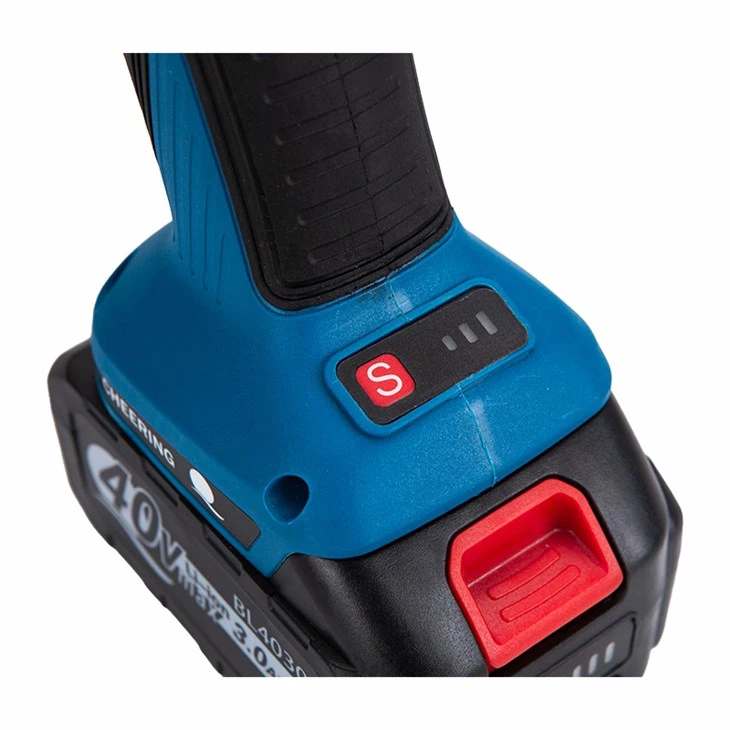
I've seen this tradeoff firsthand with a recent customer of ours: a small contractor who does home renovations. He initially bought a set of regular 115mm angle grinders for his team, but after receiving multiple noise complaints from clients about his work on residential homes, he switched to our mute angle grinders and saw an immediate drop in complaints. He told me that the noise reduction made his teams more productive, because they didn't have to yell over the tools all day, and they didn't have to wear hearing protection for short tasks, which made communication faster. For his regular work on commercial sites, he still keeps a few standard angle grinders on hand for jobs where noise isn't a concern, so he uses the right tool for every job.
It's also important to address some common myths about mute angle grinders. Some people think that quiet grinders don't last as long as regular ones, but in our experience, the opposite is true. Because mute angle grinders use brushless motors, which have fewer moving parts, they tend to have a longer lifespan than regular grinders with universal motors-we offer a two-year warranty on all our mute angle grinders, compared to one year on our standard models. Another myth is that they're only good for light-duty work, but our models are designed for heavy use, 8 hours a day, for professional contractors. We test every mute angle grinder for performance, noise levels, and durability, so you don't have to worry about it breaking down mid-project.
If you're ready to make the switch to a quieter, more productive tool, we encourage you to browse our full range of angle grinders, from the basic Angle Grinder 115 models for occasional use to the professional-grade Mute Angle Grinder line for daily work. We also offer specialized options like the adjustable-speed 115mm Angle Grinder Variable Speed and space-saving 115 Degree Angle Grinder models to fit every project need. For bulk orders or custom inquiries, please reach out to our team to discuss how our tools can fit your worksite requirements.
References
Occupational Safety and Health Administration (OSHA). (2022). Noise and Hearing Conservation. U.S. Department of Labor.
Power Tool Institute (PTI). (2023). Handbook of Handheld Power Tool Design and Performance.
National Institute for Occupational Safety and Health (NIOSH). (2021). Noise Exposure Guidelines for Construction Workers.


